If you walked into a server room at a typical regional bank today, you might feel like you’ve stepped into a time machine. We’re talking about core banking platforms that are 60 or 70 years old, running on code languages that most modern engineers haven’t touched in decades.
This isn’t just a nostalgia trip. It’s a critical bottleneck for commercial banks trying to compete in a world that demands instant payments, real-time visibility and embedded finance.
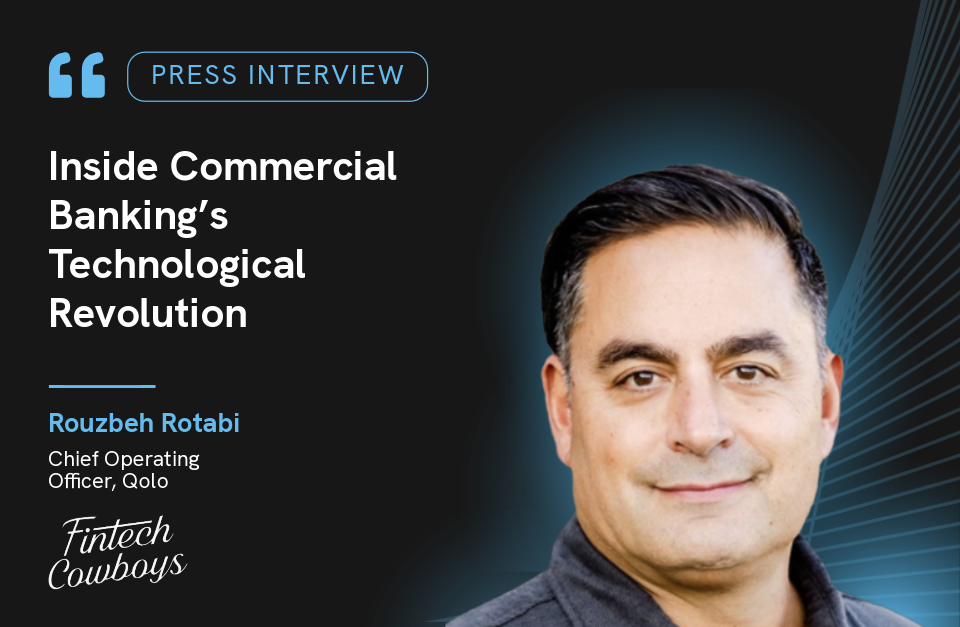
On a recent episode of The Fintech Cowboys, Qolo COO Rouzbeh Rotabi sat down to discuss exactly this tension. They dove deep into the shift toward embedded finance, the rise of niche banking and why the smartest banks are treating their legacy cores less like engines and more like ledgers.
Here is a look at the key takeaways for commercial banking modernization from their conversation.
The “Museum of Technology” Problem
One of the most striking moments in the podcast came when Rouzbeh quoted: “Banks are going to become museums of technology.”
It’s a harsh reality but a fair one. Many commercial banks are operating on “chassis” built for a different era. As Rouzbeh pointed out, some of these systems are still written in COBOL. A language so old that if you pulled a random engineer with ten years of experience, they likely wouldn’t know how to code in it.
The problem isn’t just that the tech is old. It’s that customer expectations have evolved faster than the infrastructure can keep up. Commercial clients, whether they are running a franchise of 50 McDonald’s locations or a tech startup, expect a digital-first experience. They want single sign-on access. They want virtual account management. They don’t want 50 different checkbooks and debit cards for 50 different sub-accounts.
When banks can’t offer these modern tools because of legacy limitations, they lose deposits to the “Big Six” (Citi, Wells Fargo, BofA, etc.) or to agile fintechs that can.
The Shift to Embedded Finance
The conversation highlighted a massive shift in how banks are viewing embedded finance. It’s no longer just a buzzword; it’s a survival strategy.
Commercial customers are demanding more than just a place to park their cash. They need lending, corporate banking, payments operations, treasury management and deposit management services all in one place.
Rouzbeh noted that the banks winning in this environment are the ones saying, “My core has a terminal velocity.” They realize they can’t rip and replace the entire core system – that’s an “act of God” in banking terms. Instead, they are looking for ways to bolt on microservices and value-added services.
This is where the concept of “banks and fintechs should be friends” comes into play. If a bank has a reliable (albeit old) chassis, they can partner with fintech infrastructure providers to add the horsepower. The fintech partner handles the specialized service, and the bank keeps the deposits. It’s a win-win that allows regional banks to compete without a six-year roadmap to transition a core.
Virtual Account Management: The Growth Lever
If you are looking for a specific example of where this technology gap hurts, look at Virtual Account Management (VAM).
According to a McKinsey survey mentioned in the episode, more than 50% of banks are prioritizing VAM. Why? Because it solves a massive headache for commercial treasurers.
In the old model, a business owner with multiple locations or entities had to open separate physical accounts for each one to segregate funds. That meant separate login credentials, separate statements and a reconciliation nightmare.
With modern VAM solutions, that same treasurer can have one parent account with infinite sub-accounts (shadow accounts). They get real-time visibility and control without the operational chaos. For the bank, offering VAM is a direct path to increasing deposits and offering deeper lines of credit. It is the number three thing commercial bankers are thinking about right now for a reason.
The Rise of Niche Banking
Another fascinating trend discussed was the return of niche banking.
Decades ago, community banks often had specific focuses based on their geography or leadership relationships. Farmers & Merchants Bank in Southern California focused on restaurants. City National Bank built its empire by funding Hollywood productions.
Today, data allows banks to replicate this strategy with surgical precision. Banks can analyze their SIC codes, see where they are winning – whether it’s dental practices, real estate title companies, or insurance firms – and double down.
But to serve a niche well, you need specific technology. A bank serving the restaurant industry needs to offer tools that understand the cash flow dynamics of a restaurant. A bank serving title companies needs flawless wire capabilities and escrow management.
By combining niche expertise with the right technology stack, regional banks can build “moats” around their business that even the biggest national banks can’t cross.
Changing the Mindset: From “No” to “How”
Perhaps the most critical takeaway wasn’t about software at all. It was about culture.
Rouzbeh shared a story about a CIO who told him, “If I have my way, my core will just be a debit and credit ledger… and I will build all the services around it.”
This represents a fundamental shift in thinking. For years, the default answer in bank compliance and IT departments was “No.” New initiatives meant 15-page authorization forms and months of debate.
To survive the current technological revolution, banks have to move from being the “Department of No” to becoming partners in innovation. It requires a mindset shift that views technology not as a threat to the core business, but as the only way to protect it.
The Future of the Core
The consensus? No one is going to build a magical new core that solves everyone’s problems overnight. The industry is too entrenched, and the risk of replacement is too high.
Instead, the future belongs to the banks that can successfully relegate the core to its primary job (being a ledger) while using modern infrastructure to handle the “oxygen supply” of payments, issuing, and money movement.
It’s a complex topic, and Rouzbeh and the Fintech Cowboys covered much more ground than we can summarize here, including the nuances of sponsor banking and the impact of regulatory scrutiny.
If you are interested in where the puck is going in commercial banking, this is a conversation you need to hear.