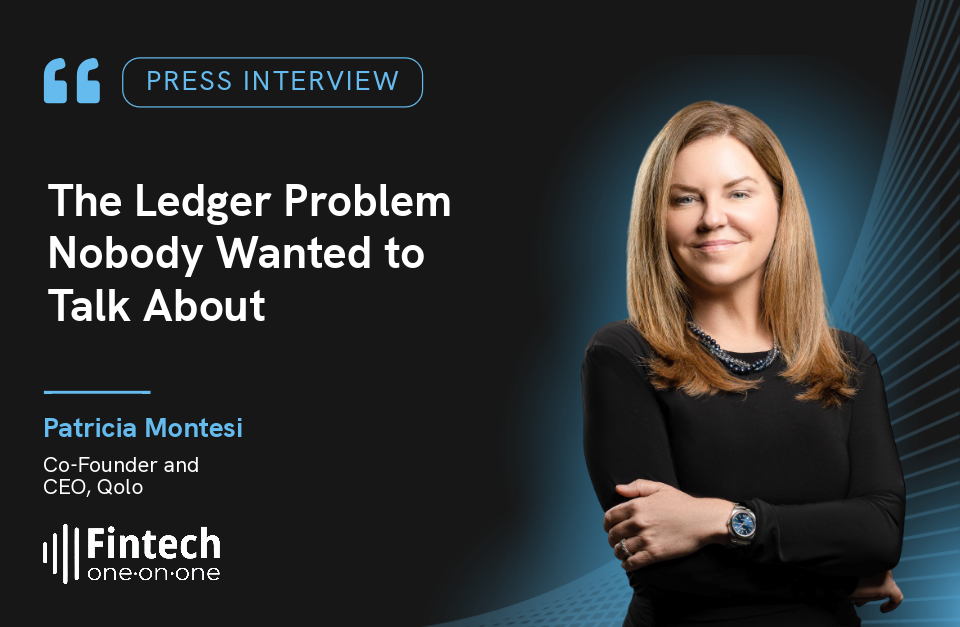
For most of its early life, Qolo was, by the admission of one of its own bank clients, the best kept secret in payments. KeyBank said it out loud. Patricia Montesi, Qolo’s CEO and co-founder, heard it and knew it was not a compliment.
That line opens a recent episode of the Fintech One-on-One Podcast, and it captures something real about how Qolo operates. The company spent years building infrastructure that banks and B2B platforms actually needed before it spent serious energy telling anyone it existed. The product came first. The story is catching up now.
If you work in commercial banking or run payments infrastructure at a B2B platform, it is worth an hour of your time to hear Patricia tell it.
The Fragmentation Problem Nobody Wanted to Name
Patricia did not come into payments with decades of orthodoxy already baked in. She came from car rental, was recruited into Wild Card Systems with zero industry experience, and spent the first part of her payments career asking why things worked the way they did. That outsider lens never left her.
What she saw after 20 years in the industry was a payments infrastructure world built around fragmentation. Card issuing here. ACH there. Push-to-card from a third vendor. A basic ledger bolted to each one that only supports its own rail. The result is a stack that works until it doesn’t, and when it breaks, it breaks at the seams. The Synapse collapse in 2024 was the clearest public example of what happens when the ledger question gets deferred long enough.
Qolo was built around a different thesis: get the ledger right first, make it bank-grade, and build every rail on top of it. Not assembled from parts. One system.
What Banks Actually Validated
Patricia walks through the KeyBank story in detail on the podcast, and it is worth hearing in her own words. Qolo was invited late into a competitive RFP for virtual account management. They won it against larger, more established names. Huntington National Bank followed.
What both banks recognized is the same thing: their commercial clients were moving deposits to Brex, Ramp, and modern non-bank alternatives because the products were better. Not the relationships. The products. Qolo gave them the infrastructure to compete on product without requiring a core migration. No rip-and-replace. No multi-year transformation program. The layer that makes the core capable of things it was never built to do.
The Ledger Conversation Has Finally Arrived
One of the more honest observations Patricia makes in the interview is that Qolo spent years making the ledger argument before the market was ready to receive it. The Synapse event changed that. Banks and platforms that had never thought carefully about who owned the ledger, where money sat at any given moment, and whether their provider’s ledger was truly bank-grade were suddenly asking exactly those questions.
Qolo had been building for that moment since 2018. The market caught up.
130% Growth and The Future
Patricia also gets into Qolo’s current scale, 25-plus clients live, over $60 billion processed through the VAM solution, 130% year-over-year growth, and 142% net revenue retention.
The conversation covers a lot of ground. Patricia’s path into payments. How Qolo thinks about rail agnosticism, including why they still support checks in 2026. How they position against legacy processors and modern competitors without naming either. And where the platform is heading next.
Listen to the full episode on Fintech One-on-One.