
When card activity, payment rails, and account structure sit in separate systems, every audit question becomes a reconstruction project. A reliable audit trail should not depend on that rework.
Picture an examiner asking a plain question. A commercial card program carries a balance at the program level. Show the transactions behind it, the payments that funded it, and the people who approved those payments. The answer exists, but it lives in three places. The card processor, the payment platform, and the bank’s account records each hold a piece. Operations can spend days pulling exports, matching formats, and explaining differences. In the end, the bank hands over a record that someone assembled for the examiner, not one the system kept.
This is a common audit problem for banks running programs across multiple providers. The controls are usually there. However, teams must rebuild the evidence every time someone asks for it.
The problem: evidence lives between systems
Banks add capabilities one provider at a time. Cards come from one, payment rails from another, and account structures from the core or a third system. Each keeps accurate records of its own activity. None keeps the record of how that activity connects. One system authorizes funds, another moves them, and a third reflects them, each on different timestamps and in different formats.
Audit and risk teams work in that connective layer. They must show that a program balance equals the sum of what sits beneath it. They must also account for every movement behind it. When people make that connection with spreadsheets, the process is slow. The answer varies from one request to the next and depends on whoever assembled it. As a result, the bank ends up defending its process before it can show the result.
The cost lands in two places. First, audit requests consume operations time that belongs to the program. Second, risk reviews of new infrastructure providers slow down when evidence arrives as separate artifacts from separate systems. Each artifact needs its own explanation.
The promise: one embedded ledger under cards and rails
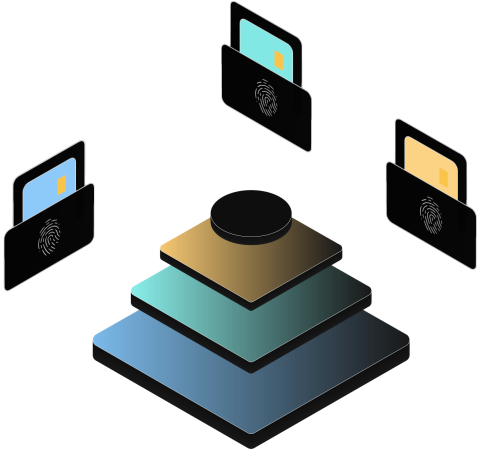
Reconciliation is easier to prove when the ledger does it continuously instead of a team doing it afterward. With Qolo, cards, payment rails, and account structure share one ledger. Teams record, view, and reconcile supported card and payment movements in one system. As a result, the audit trail is a property of that architecture, not a report someone builds from separate sources.
The product: an audit trail the audit team can see
Quantum Ledger is Qolo’s embedded ledger. It provides real-time balances and transactions, continuous reconciliation, and audit-ready reporting for finance, risk, and regulators.
Reconciliation runs at the master account, program, and cardholder level. As a result, the bank can answer “does this balance tie out?” at whichever level the examiner asks. Qinetic Issuing and Qascade Money, which orchestrates ACH, wire, RTP, and FedNow, use the same ledger architecture.
Qolo also records access. Qolo’s User Access Report captures the date and time of each access event. It also captures the user’s identity, company, program, and role. In addition, it records the request or action taken, reason codes, and changes to support users. The question “who accessed what” gets a record as its answer.
For approvals, Qolo’s API supports maker-checker workflows for transfer and payment requests. The bank or program configures them, and Qolo captures checker decision statuses and notes on each request. A reviewer can see that a payment moved, who reviewed it, and what they decided. Qolo also provides reporting for clearing transactions, network summaries, and bulk card orders. As a result, operations and compliance work from the same reports.
Four audit trail questions Qolo answers directly
A bank evaluating infrastructure can put these questions to any provider. Qolo’s platform answers each one directly.
- Can balances and transactions be viewed at master, program, and cardholder level in real time?
- Do card activity and payment movements reconcile in the same system, or does reconciliation happen as a separate step afterward?
- Can the provider show who accessed the platform, in what role, and what they did?
- For payment requests, can it show who reviewed each one and what they decided?
What auditability does and does not do
Strong auditability supports a bank’s compliance program. However, it does not guarantee regulatory compliance, and no provider should claim that it does. Compliance remains the bank’s responsibility, and it depends on the bank’s own controls, governance, contracts, and regulatory relationships. What a single ledger removes is the reconstruction work between systems. As a result, the evidence a risk team needs for its audit trail sits in one system when the question arrives.