
The moment a B2B platform issues its first card, it has a ledger problem, whether or not it recognizes it.
Issuing a card creates an ongoing requirement to track funds, attribute activity, maintain balances, account for authorizations and settlements, and keep a reliable record of what happened. Deferring that work until the program is “large enough” does not postpone a feature. It postpones a core architectural decision.
That is why an embedded ledger for B2B platforms belongs in the first infrastructure conversation. The platforms that ran into serious operational and compliance problems in 2024 were not operating recklessly. They were operating on infrastructure that was never designed for the complexity of a real card program at scale.
The problem was not intent. It was architecture.
A card transaction is more than an authorization
A card transaction looks simple from the outside. A cardholder taps, the merchant gets an approval, and the platform displays a balance. Behind that, the platform must separate available funds, pending authorizations, and posted activity, and tie each event to the right program, customer, funding source, and cardholder. Clearing, reversals, and refunds must update those relationships without erasing the original history.
That is the difference between card issuing infrastructure and ledger infrastructure for card programs. A processor handles network messages and the mechanics of authorization, clearing, and settlement. A ledger maintains the financial state behind those events: which balance changed, how it changed, and how accounts and programs relate. A serious card program needs both.
Without a shared financial model, the processor knows an authorization occurred while the bank account shows only an aggregate balance. The link between the two lives in a separate database, a delayed file, a spreadsheet, or the memory of the operations team. When cards are funded from a pooled omnibus or FBO account, those records are the only thing separating one customer’s funds from another’s. That is how commingling happens, and it gets harder to unwind with every new customer, employee card, funding model, or use of embedded payments for platforms.
Where the architecture starts to break
The first symptom is usually a growing queue of exceptions. Operations sees balance discrepancies and reconciliation backlogs. Finance cannot quickly explain why an available balance differs from a posted balance. Support cannot trace a change across authorization, settlement, fees, reversals, and refunds. Every new workflow needs another allocation rule or manual review.
These are not staffing problems. More analysts add capacity but do not change the architecture that created the work. Disconnected systems still produce different versions of the truth, and exceptions get more expensive to isolate as volume grows.
That is the infrastructure lesson of 2024. It does not mean every troubled platform lacked a ledger, or that a missing ledger was the sole cause of any failure. It means that when records of ownership, balances, and movements cannot be produced and reconciled reliably, operational, financial, and compliance risk becomes much harder to contain. The BaaS collapse was a ledger story for that reason.
The regulatory response pointed the same way. In 2024, the FDIC proposed stronger recordkeeping for certain custodial deposit accounts, including beneficial-owner-level records, continuous bank access to records held by third parties, and at-least-daily reconciliation. The proposal applies to specific bank arrangements and does not turn ledger software into a compliance program. It does reinforce the need for accurate, accessible records of who owns what.
Fund segregation and real-time visibility are the floor
For a modern card program, fund segregation and real-time visibility at the program and cardholder level are not advanced features. They are the floor.
A ledger layer should give the platform one auditable record of financial events and balance movements, with clear attribution across master accounts, programs, customers, and cardholders. It should separate available funds, pending activity, and posted transactions, make reversals, refunds, fees, and settlements traceable, and give product, operations, finance, and risk teams the same view of the same financial state.
This is operational fund segmentation, not a determination of legal ownership, custody, trust status, or bankruptcy treatment. Those depend on account structures, contracts, banking relationships, and applicable law. A ledger strengthens the records those arrangements rely on. It does not replace them.
Why ledger decisions belong in the first architecture review
Retrofitting a ledger under a live program is hard because the platform must map historical transactions and live balances onto relationships that did not exist when the activity occurred. Teams reconcile several systems, keep customer-facing balances stable, and redesign APIs and operating procedures at the same time.
That is why the ledger decision belongs before the first card is issued. It shapes the product model, the account hierarchy, the authorization experience, the reporting surface, the reconciliation workflow, and the cost of adding customers, funding sources, card constructs, and payment rails. Treated as a later add-on, it becomes the constraint every one of those decisions has to work around.
Where Quantum Ledger fits
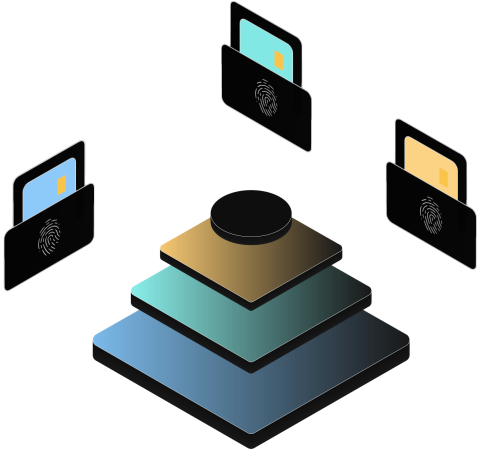
Quantum Ledger is Qolo’s real-time, programmable ledger and the foundation of the platform. Qinetic Issuing, Virtual Account Management, and Qascade Money (ACH, RTP, FedNow, and wire) run against the same ledger, so a platform does not maintain a separate financial model for each product.
For a B2B platform, that means funds segregated at the program and cardholder level before the first card is issued, balances visible at the master, program, and cardholder levels, and card transactions and rail payments reconciled in one view. Posting is real time and reconciliation is continuous for supported card and payment movements.
Quantum Ledger is not a dashboard added after processing. It is the layer beneath the card program and the payments around it. It does not replace the processor, the bank, or the broader compliance program.
Qolo’s bank-grade infrastructure is available to B2B platforms. In 2025, Qolo became the first modern processor to win a top-25 commercial card relationship with a major U.S. bank, a door that had been closed to modern infrastructure for decades. A platform building its first card program starts on the same foundation.
The question to take into your infrastructure review
Before choosing a card issuing stack, ask: can your platform explain where every dollar belongs, how every balance changed, and why every transaction is reflected the way it is?
If the answer depends on stitching together processor files, bank statements, spreadsheets, and manual explanations, the ledger problem already exists. See how Quantum Ledger works as the embedded ledger beneath your next card program.