Managing money on behalf of someone else is one of the most consequential financial responsibilities a person can have. Trustees, guardians, and fiduciaries oversee funds for vulnerable individuals every day, often while working with payment systems that were never designed for the job.
That was the gap Eynod set out to close.
Built for the trust, fiduciary, and guardianship market, Eynod helps organizations replace fragmented manual workflows with a more modern model for controlled disbursements, compliance oversight, and day-to-day money movement. And for Eynod, that shift was not just about better infrastructure. It was about restoring independence for beneficiaries and relieving operational pressure for the people managing funds on their behalf.
The problem: legacy money movement was creating operational drag
Before Eynod, the day-to-day experience for many fiduciaries was defined by paper checks, disconnected providers, and manual reconciliation. These teams were managing complex trust structures at scale, but the tools underneath them were outdated and fragmented.
At one point, Eynod’s parent organization was managing 15,000 individuals and moving roughly 25,000 checks per month. The broader operating environment relied on one provider for virtual cards, another for ACH transactions, and a third for physical cards. That fragmentation created reconciliation backlog, staff burden, and financial exposure when inbound and outbound flows did not line up cleanly.
As Isaac Itzkowitz, Founder and CEO of Eynod, put it:
“We needed to build a platform that gives us real insight, real-time money movement, with all the different payment modalities, and really start revolutionizing these industries.”
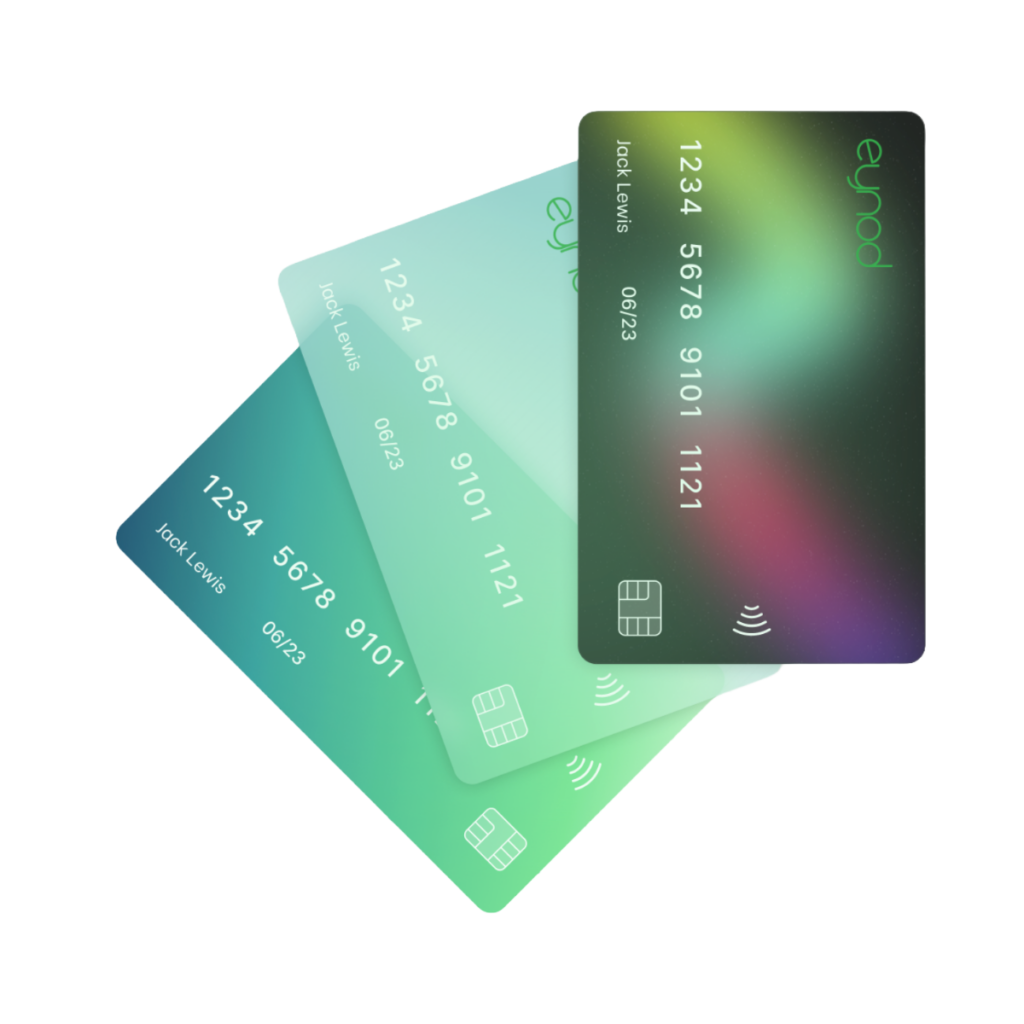
Paper checks were a particular pain point. They were slow, difficult to track, vulnerable to delay, and expensive to reconcile in practice. For fiduciaries operating on thin margins, that meant too much time spent managing administrative exceptions instead of serving more clients.
Why Eynod moved toward card-based disbursements
Eynod made a deliberate decision to make card-based disbursements a core part of its platform.
ACH still has a role in specific fund movements, but cards offered something legacy methods could not: immediate transaction records, better spend controls, cleaner oversight, and a much better experience for both fiduciaries and beneficiaries.
That mattered especially in use cases where beneficiaries still wanted, and deserved, a degree of financial independence.
With the right controls in place, card-based disbursements let people pay for everyday needs in familiar ways while allowing administrators to maintain oversight. That improved both dignity and operational efficiency.

In Isaac’s words:
“We serve a vulnerable population who want to feel independent. They want to be able to say, ‘I pay my own bills.’ … With the right controls, you can allow them to maintain their dignity, by not having to request for bills to be paid, and continue to pay their bills the way they’ve always done it.”
For Eynod, this was not just a payment-method upgrade. It was a structural redesign of how funds could be accessed, controlled and monitored.
Why Eynod chose Qolo
Eynod initially evaluated alternative providers acting as third-party program managers, but ultimately decided that direct architectural control mattered too much to hand off.
Instead of assembling multiple point solutions for KYC, card fulfillment, disputes, and payments, Eynod chose Qolo as a unified infrastructure layer.
That gave Eynod a more modern stack for card issuing and processing, compliance shielding, and operational support for both pooled and individual trust account structures.
According to Isaac:
“The way Qolo is set up, a single unified API, is a very simplistic model. I think it’s a more modern stack than what was typically done in the past. The added advantage was that the stack had everything we needed. They had KYC, they had card ordering and card fulfillment, they had disputes, everything was in one centralized place with a single vendor.”
That mattered because Eynod was not building for a lightweight fintech use case. It was building for fiduciary financial management, where KYC, AML, BSA controls, reporting, and trust account complexity are non-negotiable.
What changed after the shift
Once Eynod moved away from manual and fragmented workflows, the operational impact was significant.
The platform reduced monthly paper check volume from roughly 25,000 to about 5,000, with a target of getting below 2,000. At the same time, Eynod reduced overhead staff requirements by 50% while continuing to grow total membership.
Just as important, the experience improved for the people actually using the system.
Fiduciaries no longer had to rely on manual reporting to answer basic operational questions. If a transaction was declined, the platform could show the exact reason in real time. If an auditor requested records, administrators could access a complete ledger history without reconstructing events by hand.
And for guardianship programs in particular, the value was immediate. Eynod gave teams a way to intake new cases faster, reroute benefits more directly, and reduce the administrative load that had been limiting how many people they could support.
As Isaac explained: “Creating efficiency for the guardian to be able to take on more cases is really the key to a lot of what we do in that space specifically.”
A better model for trust, guardianship, and care programs
The impact of the Eynod and Qolo partnership is especially visible in high-friction environments like guardianship programs, pooled trusts, disability care programs, and assisted living use cases.
These are not segments where operational inefficiency is just inconvenient. When money movement is slow or hard to track, the consequences land on people who may already be in vulnerable situations.
By combining a cleaner end-user experience with stronger controls and more unified infrastructure, Eynod has created a model that helps fiduciaries operate with more confidence while preserving beneficiary access and dignity.
Scaling for the future
Demand for fiduciary tools is growing alongside aging demographics and rising regulatory expectations. That means the organizations that serve this market need systems that can scale with complexity instead of adding more manual work around it.
Eynod’s approach offers a strong example of what that looks like in practice: modern disbursement infrastructure, real-time operational visibility, and a user experience built around both compliance and care.
As the company continues to expand, the foundation matters. Eynod did not just replace checks with cards. It built a more scalable framework for managing money on behalf of others.
Final takeaway
Eynod’s story is not only about modernization. It is about building payments infrastructure that fits the realities of fiduciary financial management.
By reducing dependence on paper checks, unifying fragmented workflows, and giving fiduciaries more control over how funds move, Eynod has made money management more efficient for administrators and more dignified for beneficiaries.
And with Qolo providing the underlying infrastructure layer, that model is built to scale.
Hear Eynod’s story in the video below.