
Recent events in the banking industry caught many in fintech by surprise. When the FDIC took control of SVB on a Friday, many companies did not know when, or even if, they could access their funds. Startups faced real concerns about their ability to stay in business the following week. Investors scrambled to find solutions, while founders spent a stressful weekend worrying about their company’s future.
Fortunately, the FDIC reassured depositors that all their funds would be available. This helped prevent one part of the crisis from getting worse. By the following Monday, the conversation had shifted to bank diversification. Companies wanted to know where to keep their money and how to avoid business disruptions if another bank failed.
But deposits are only one part of the equation. What about the services banks provide?
If your financial services depend on a single bank, what happens if that bank faces a crisis like SVB or Signature? What if regulators issue an order that limits its ability to support your business? Are you any less at risk? In fact, regulatory action is a much more likely threat. It has already happened many times.
Earlier in my career, I joined a company to lead its open-loop card business. Soon after arriving, I discovered that the company relied on just one sponsor bank. I immediately started looking for a second banking partner.
Before we could make real progress, our existing bank received a consent order. This order prevented us from signing new business. Our program could continue operating, but it could no longer grow.
For nearly a year, growth was limited. We also lost several potential partnership deals. The financial impact was significant. The bank had not failed or entered receivership, but the effect on our business was just as serious.
The change in administration in Washington in 2020 brought a sharp increase in regulatory scrutiny. In mid-2022, one bank told us it had nearly 50 regulatory audits completed or underway that year. This particular bank was well prepared and had little cause for concern. But not every bank is in the same position.
In recent months, several banks have faced regulatory action. This trend is likely to continue. Add concerns about bank solvency, and the risk of banking service disruptions has never been greater. Fintech companies must make this a central part of their risk management strategy.
What’s the Solution?
If you haven’t considered diversifying your banking partners, now is the time. If your business depends on a single bank, either directly or through a fintech partner, finding additional partners is critical.
But adding banks is not easy. It takes time, resources, and expertise. You need more technical connections, more reconciliation and reporting, and more payment operations support. You also need a plan for managing customer service across multiple providers.
At Qolo, we take a different approach.
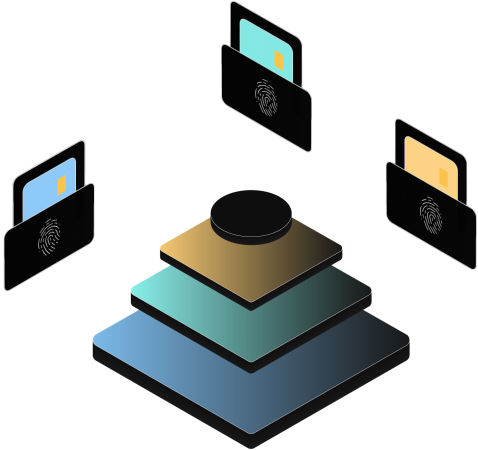
Our advanced ledger and Financial CRM™ connect services from multiple banks and their products to a single end user. This creates built-in diversification and redundancy.
With our platform, partners can switch between banking partners and programs with ease. All it takes is changing one parameter in the single API that powers every payment type.
If a banking partner becomes unavailable for a specific program, our partners can update the API data and keep their business running. Imagine having bank redundancy at your fingertips by changing a single field.
But you don’t have to take our word for it.
In a recent press release, we announced our partnership with PayQuicker, a leading global fintech payouts provider. One of their key priorities was finding a partner that could quickly integrate with new banks and provide access to multiple banking partners.
Our flexible, omnichannel platform made that possible. We designed our technology to support multiple banking partners, and it is already integrated with four banks, with at least three more in the pipeline for this year.
Reach out to learn how Qolo provides next-generation, redundant infrastructure to support your critical payment needs.